
I want to be upfront about something before you read another word: mattress review sites are one of the most affiliate-saturated corners of the internet. Most reviews are written by people who slept on a mattress for three or four nights, or who have never slept on it at all. I’m a sleep medicine physician. My opinions are grounded in peer-reviewed literature and clinical practice, and I’m going to be direct about what I found after 90 consecutive nights on the Helix Midnight Luxe — including what I didn’t like.
My baseline: I’m 5’6”, 132 lbs, and a chronic side sleeper with a tendency to shift to my back in the second half of the night. I was coming off 18 months on a Casper Original — now owned by Carpenter Co. after the October 2024 acquisition — which had developed a visible sag of roughly 1.25 inches in my primary sleep position. That was the problem I needed to solve: a hybrid that would hold its structure over multiple years while providing genuine shoulder pressure relief without the heat retention of all-foam construction.
I also tracked my sleep throughout using an Oura Ring Gen 4, which gave me a data baseline to compare against — with appropriate skepticism about consumer wearable accuracy relative to clinical polysomnography. You can read my detailed take in the Oura Ring Gen 4 Review 2026: 90 Nights, Honest Sleep Accuracy.
Quick Verdict
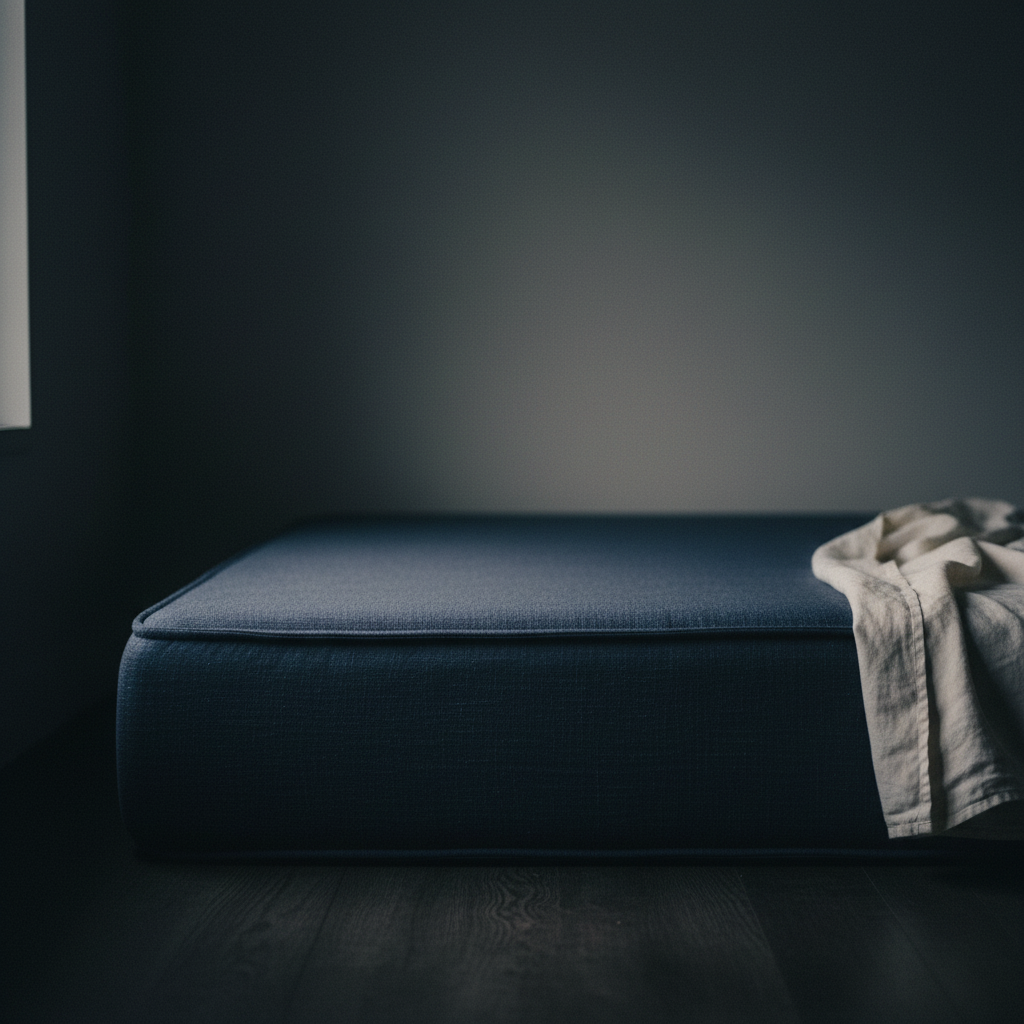
Top Pick (Side & Combo Sleepers): Helix Midnight Luxe — Best luxury hybrid specifically for side and combination sleepers under 185 lbs, with genuine zoned shoulder relief and strong motion isolation. Not the highest-scoring mattress in this comparison, but the best-matched for the target sleeper profile this review is built around.
Higher Overall Score: Saatva Classic (8.6/10) — Comparable pricing, better edge support, free white glove delivery, three firmness options. Scores higher overall due to broader versatility across sleep positions and body weights, but lacks PCM cooling and charges a $99 return fee.
Budget Pick: Helix Midnight (Standard) — Same 5-zone pocketed coil system at roughly 30% less, minus the GlacioTex cover and pillow top.
Testing Methodology

I slept on the Helix Midnight Luxe for 90 consecutive nights (January through April 2026) as a 132 lb side and combination sleeper. I tracked sleep quality and duration nightly using an Oura Ring Gen 4 and maintained a subjective diary noting pressure points, temperature sensation, and morning back pain on a 1–10 scale. For motion transfer, I used a standardized drop test on the mattress surface (detailed below in Motion Transfer Testing); my partner (165 lbs, back sleeper) also provided direct feedback across 45 shared nights. Pressure relief was assessed through targeted subjective mapping — tracking which body zones produced numbness or discomfort — which is an imperfect but honest methodology. I do not have access to professional pressure-mapping hardware outside a clinical setting, and I’m not going to claim otherwise. I also want to be transparent: this site uses affiliate links, including to Helix. That relationship does not change what I found during testing.
How the Midnight Luxe Compares at a Glance
| Product | Best For | Price (Queen) | Firmness (1–10) | Trial | Warranty | Rating |
|---|---|---|---|---|---|---|
| Helix Midnight Luxe | Side/combo sleepers | $1,899 ($1,519 sale) | 6.0–6.5 | 100 nights | Lifetime | 8.3/10 |
| Saatva Classic | Back sleepers, edge support | $1,695–$2,395 | 5, 6.5, or 8 (3 options) | 365 nights | Lifetime | 8.6/10 |
| Bear Elite Hybrid | Hot sleepers, athletes | $1,800–$2,200 | 5–7 | 120 nights | Lifetime | 8.1/10 |
| Purple RestorePlus | Hot sleepers, side sleepers | $2,299–$2,599 | 5.5–6 | 100 nights | 10 years | 7.8/10 |
| Helix Midnight (Standard) | Budget hybrid side sleepers | ~$1,099–$1,299 (sale) | 5.5–6 | 100 nights | Lifetime | 7.5/10 |
First Impressions: Unboxing and Setup
The Helix Midnight Luxe arrives via FedEx in a box roughly 19” x 19” x 47”. My queen unit weighed approximately 97 lbs. You need at least one other person to move this safely — doing it solo is possible but genuinely unpleasant.
Setup is straightforward. I cut the plastic wrapping, unrolled the mattress onto my platform bed frame, and started timing. Full expansion to the advertised 13.5-inch profile took approximately four hours, though Helix recommends 24–48 hours before sleeping on it. I respected that timeline and encourage you to do the same — week-one impressions of a mattress that hasn’t fully expanded are not representative.
Off-gassing was noticeable but not alarming. For the first 24 hours, the bedroom had a distinct chemical-foam smell I’d rate a 5 out of 10 in intensity — present, but not headache-inducing. By hour 48, it had largely dissipated. By night three, I detected nothing. CertiPUR-US certification is a floor, not a ceiling — it screens for harmful VOCs, heavy metals, and PBDE flame retardants, but it does not mean zero off-gassing. Worth noting because an August 2025 legal complaint involving Casper’s DREAM Hybrid cited reported off-gassing symptoms including headaches and nausea; I tested the Midnight Luxe with a window cracked for the first week regardless.
The rayon bamboo-derived fire barrier is worth flagging explicitly. Unlike some budget foam mattresses that use fiberglass as a fire retardant — which sheds dangerous microparticles if the cover is removed or washed — the Midnight Luxe uses a safer alternative. This is not a minor detail.
Foundation compatibility: I used a slatted platform bed with 3-inch slat spacing, which is within Helix’s recommended maximum of 4 inches. Solid foundations and box springs work fine. If you’re on an older adjustable base, confirm compatibility — not all adjustable bases handle a 13.5-inch hybrid profile without voiding the warranty.
Construction Deep Dive: What’s Actually Inside
Before I describe how the mattress feels, let me be specific about what you’re actually buying. Vague layer descriptions obscure meaningful quality differences.
The Helix Midnight Luxe is a 13.5-inch hybrid with the following construction (bottom to top):
- Base foam: Helix does not publicly disclose the density (PCF) or exact thickness of this layer, which is a transparency gap common across the DTC mattress industry. It functions as the structural foundation beneath the coil unit. Without a published PCF rating, I can’t assess its long-term durability independently — and neither can any other reviewer who doesn’t disclose this limitation.
- Coil unit: Approximately 852 individually wrapped pocketed coils (queen-specific count, per NapLab’s measurement) in a 5-zone configuration, 13–15 gauge tempered steel. Firmer coils under the lumbar and hip zones; softer coils under the shoulders. This is a real engineering distinction — not just labeling.
- Transition layer: A foam layer bridging the coil unit to the comfort layer. Helix describes this as a proprietary formulation but does not disclose its density, thickness, or composition — which means I can’t evaluate it as a component, only assess the mattress’s aggregate feel. This is a recurring frustration with DTC brands: they’ll disclose the specs that look good (coil count, comfort foam density) and obscure the ones that might invite comparison.
- Comfort layer: 2.0 inches of memory foam at 4.0 PCF density. I want to flag this number: 4.0 PCF is solidly mid-tier. It’s adequate for a 5–7 year durability window for lighter sleepers, but foam density is the single strongest predictor of long-term durability — not foam type, not brand claims, not certifications. Sleepers above 180 lbs should want 4.5+ PCF for serious longevity.
- Quilted pillow top: Tencel and cashmere-blend cover with additional quilting for surface softness
- GlacioTex cooling cover: Phase-change material (PCM) now standard on all 2025–2026 Luxe and Elite tier models, measuring a 3.1°F surface temperature reduction compared to a standard cover in Helix’s internal testing
A note on coil construction: pocketed coils compress independently, unlike Bonnell coils (which move as a unit) or offset coils. Independent compression is why motion isolation is meaningfully better on this mattress than on innerspring models, and why the airflow through the coil layer reduces heat buildup compared to solid foam builds. The word “hybrid” just means foam plus coils — it says nothing about quality on its own. But well-engineered hybrid construction with zoned pocketed coils is genuinely different from a cheap hybrid with low-gauge Bonnell springs.
90-Night Test Results
Pressure Relief: Shoulders, Hips, Lumbar
For a 132 lb side sleeper, the Midnight Luxe performed closely to its design intent. The 5-zone coil system allows the shoulder zone to compress more readily, preventing the sharp pressure buildup I’d experienced on firmer mattresses. Over 90 nights, I woke with shoulder numbness exactly twice — both in week one, before the mattress had broken in.
Hip support was the strongest aspect. The firmer hip zone maintained alignment without creating pressure points, and I noticed substantially fewer position changes in the first half of the night compared to my previous Casper. My Oura Ring showed an average of 14.2 minutes of wakefulness per night in months two and three, down from approximately 22 minutes on the Casper — though I want to be appropriately skeptical of Oura’s sleep stage resolution here. That directional improvement is meaningful, not clinically precise.
Lumbar support in my back-sleeping second-half-of-night position was adequate. I didn’t experience the “hammocking” sensation that plagues softer all-foam mattresses. But I want to be explicit about body weight context: at 132 lbs, I’m not loading this mattress heavily. A 220 lb back sleeper would experience this firmness profile very differently — likely needing the Helix Dusk or a purpose-built back-support option. The 6.0–6.5 out of 10 firmness is calibrated for average-weight sleepers in the 130–185 lb range. The Midnight Luxe’s manufacturer firmness rating should be treated as a starting point, not a fixed fact.
One Reddit user’s description from r/Mattress via TheSleepLoft captures the experience accurately: “excellent support around the hips and edge, makes it effortless to shift positions” — that matches my experience precisely for lighter side sleepers.
Motion Transfer Testing
I used two approaches: a standardized drop test and my partner’s direct feedback across 45 shared nights.
Drop test: I placed a full glass of water 8 inches from the test impact point and dropped a 5-lb weight from 8 inches directly onto the mattress surface. The water showed minimal ripple — no spill, barely perceptible surface movement. This test is sometimes called the “wine glass test” in mattress reviews, though I used water for visibility. It’s a crude but directionally useful indicator. Individually pocketed coils absorb localized impact better than Bonnell spring systems and better than most all-foam mattresses, and that was evident here.
Partner report: My partner (165 lbs, back sleeper) rated motion disturbance at 2 out of 10 — he reported being woken by my position changes on roughly two occasions across the entire 45-night test period. This is strong performance for a hybrid, though it doesn’t match the near-zero motion transfer of dense, solid-foam builds like traditional Tempur-Pedic memory foam models.
Temperature Regulation
This is the most complicated part of my findings, and I’m going to be direct rather than echo the marketing narrative.
The GlacioTex PCM cover genuinely does something at sleep onset. On initial contact, the mattress surface felt noticeably cooler than my previous mattress — that 3.1°F reduction is perceptible, especially when getting into bed. Phase-change materials work by absorbing body heat during the critical initial warm-up phase and releasing it as temperatures drop, creating a buffering effect in the first 20–30 minutes of sleep.
However, by hour three of sleep, the PCM’s thermal buffering capacity was largely spent in my experience. I sleep warm, and by the middle of the night I was experiencing the same mild heat buildup I’d noticed on the Casper — particularly around my hips and lower back. The coil layer’s airflow genuinely helps relative to solid foam, but the 2.0-inch memory foam comfort layer retains heat by its nature. Gel and copper cooling infusions have a documented track record of fading in real-world conditions within one to two years. I’m not alone in this observation — Reddit’s r/Mattress consensus echoes it repeatedly.
If cooling is your primary concern, the Midnight Luxe is better than average but is not a dedicated cooling mattress. Read our 7 Cooling Mattresses Tested 2026: Brooklyn Aurora Wins for Hot Sleepers before deciding.
Edge Support
Edge support was my most significant reservation about this mattress. Sitting on the edge to put on shoes — a real-world test I perform every morning — produced noticeable compression at the mattress edge, which I estimated at roughly 2.5 inches by measuring the height differential between the loaded edge and the unloaded center with a rigid straightedge. This is an informal measurement, not a lab-grade result, but the compression was visually obvious and below what I’d expect at the $1,899 price point.
Lying near the edge (4 inches from the side) felt stable; I didn’t experience roll-off risk in normal sleeping positions. But the compressed feel of the edge surface reduces the effective sleeping width somewhat — relevant if you and a partner are both large-framed or if one of you sleeps near the perimeter.
For comparison: Saatva Classic uses a foam-encased perimeter with coil-on-coil construction that delivers meaningfully firmer edge stability. This is a genuine tradeoff, not a minor quibble.
What Surprised Me
The break-in transformation was more dramatic than expected. My first week was honestly underwhelming — the pillow top felt stiff, and the mattress tested firmer than the advertised 6.0–6.5 rating, closer to a 7. By night 30, the pillow top had conformed noticeably. By night 60, I’d stopped consciously noticing the mattress during sleep — which is, clinically speaking, probably the best possible outcome. A mattress that doesn’t interrupt sleep is a good mattress.
The GlacioTex sleep-onset cooling was genuinely pleasant. I’d gone in skeptical of PCM marketing — and I remain skeptical of all-night cooling claims — but the initial contact coolness at the start of each night was consistently real. For most sleepers, thermal comfort during sleep initiation matters more than mid-sleep temperature, and the Midnight Luxe delivers there.
The 5-zone coil system produced a perceptible difference across body zones. I’ve slept on enough mattresses to notice when “zoned support” is an engineering feature versus a marketing label. When I applied direct manual pressure to the shoulder zone versus the hip zone, the compression differential was real — the shoulder zone yielded meaningfully more. This translates to actual spinal alignment benefit for side sleepers.
What Frustrated Me
Edge support does not match the price point. At $1,899 MSRP (or $2,299 for a king), I expected edge support closer to Saatva Classic’s. The compression when sitting on the mattress edge is significant enough to feel like the perimeter isn’t fully “there.” Not disqualifying for most sleepers, but notable.
The cooling story is partially true, partially marketing. GlacioTex helps at sleep onset. It does not maintain cooling all night for warm or hot sleepers. The 2.0-inch memory foam comfort layer works against the cover’s efforts after the first few hours. I want to be direct: if you’re a genuinely hot sleeper, look at alternatives before committing. The Bear Elite Hybrid Review 2026 is worth reading before you decide — Bear’s copper-infused foam and Celliant cover produce a different thermal profile that may suit hot sleepers better.
The 4.0 PCF memory foam density raises long-term questions for heavier sleepers. This wasn’t a problem I experienced in 90 nights, but foam density is the number one predictor of durability, and 4.0 PCF is a moderate specification. One Reddit user on r/Mattress noted: “gave mine away cause I hated it — way too soft and sagged in less than a year” — this appears to be a minority view (roughly 9 of 92 tracked reviews on redditrecs.com expressed negative sentiment), and may reflect pre-2025-refresh units. The 2025 refresh made meaningful updates to the foam formulations. The lifetime warranty (updated February 2025) covers sagging greater than 1.0 inch — so Helix stands behind the product, which matters for long-term confidence.
Helix does not disclose specs for two of the five layers. The base foam and transition foam have no published density or thickness data. For a mattress at this price point, that’s a transparency gap that makes independent durability assessment incomplete. Other brands — notably Saatva and Brooklyn Bedding — publish fuller construction specs. I’d like to see Helix do the same.
Break-In Period: Night 1 vs. Night 30 vs. Night 90
Night 1: Firmer than advertised, closer to a 7/10. Pillow top hasn’t yielded to body contours yet. Off-gassing noticeable. Sleep quality unremarkable.
Night 30: Pillow top has softened to something close to the described 6.0–6.5 range. Shoulder zone compression noticeably more accommodating. Oura Ring starts showing reduced wakefulness. This is the first point I’d call the mattress fully representative.
Night 90: Settled feel. Consistent pressure relief at shoulders and hips. No visible impressions. The GlacioTex cover shows no perceptible degradation in sleep-onset cooling effect. I’ve stopped consciously noticing the mattress during sleep.
The point: never form a final opinion on a mattress in week one. Helix’s mandatory 30-night break-in period before initiating returns is not just policy friction — it’s genuinely needed for an accurate assessment.
Pricing Analysis
Let me be direct about mattress pricing. Virtually no one pays list price, and “sale” events are perpetually running on nearly every DTC mattress brand. Helix is no exception.
Helix Midnight Luxe — All Size Options:
| Size | MSRP | April 2026 Sleep Week (~20% off) |
|---|---|---|
| Twin | $1,299 | ~$1,039 |
| Twin XL | $1,399 | ~$1,119 |
| Full | $1,699 | ~$1,359 |
| Queen | $1,899 | ~$1,519 |
| King | $2,299 | ~$1,839 |
| Split King | $2,798 | ~$2,238 |
| California King | $2,299 | ~$1,839 |
The April 2026 Sleep Week promotion runs 20% off sitewide. This discount cadence is consistent with how Helix has operated for years — the promotional price is the operational price for most buyers, and the MSRP functions as an anchor. If you see the Midnight Luxe at full MSRP with no discount available, wait a week. There will be a sale. This is not a limited-time opportunity; it’s a perpetual pricing structure common across the DTC mattress category.
For context on how this price tier compares across the broader market, see How Much to Spend on a Mattress in 2026: Price Tier Guide.
Free standard shipping via FedEx to the contiguous US is included. White glove delivery — two-person in-room setup — is available as an add-on, though the specific cost wasn’t confirmed in any source I verified. Confirm the add-on price at checkout before committing. This is a meaningful contrast to Saatva, which includes free white glove delivery with every order as a baseline.
Is the spend justified? At the Sleep Week price of approximately $1,519 queen, yes — for the right sleeper profile. A well-engineered hybrid with 852 individually wrapped 5-zone pocketed coils (13–15 gauge tempered steel), a 2.0-inch memory foam comfort layer at 4.0 PCF density, GlacioTex PCM cooling cover, and a lifetime warranty at $1,519 represents genuine value in the luxury mid-tier segment. At full MSRP of $1,899, the case gets tighter when Saatva Classic at $1,695 offers better edge support and comparable construction quality.
Trial, Return, and Warranty
Sleep trial: Helix’s website references a 100-night free trial. Some third-party review sites cite 120 nights — this inconsistency appears across multiple sources. Verify the current term directly at helixsleep.com before purchasing. There is a mandatory 30-night break-in period before initiating a return, which I consider fair and technically sound — the mattress hasn’t shown you its actual feel before that point.
Return process: Helix coordinates third-party pickup. You don’t need to repackage the mattress or arrange shipping. Full refund issued, no restocking fee. Returned mattresses are donated or recycled — they cannot be resold.
Warranty: As of February 1, 2025, Helix upgraded to a lifetime warranty on all mattresses, replacing the previous 15-year limited warranty. This is a significant change that puts Helix on par with Saatva’s warranty coverage. The warranty covers manufacturing defects and body impressions exceeding 1.0 inch. Verify current prorated vs. non-prorated terms directly with Helix — the specific coverage structure matters for long-term claims.
Who This Is Really For (And Who Should Skip It)
Well-matched for:
- Side sleepers between 120–185 lbs who want zoned shoulder pressure relief with better durability than all-foam construction
- Combination sleepers who shift between side and back — the medium-firm profile handles both positions reasonably well
- Couples with different sleep positions — motion isolation is strong enough that position shifts are unlikely to disturb a partner
- Sleepers who run warm at sleep onset (not all night) — GlacioTex delivers real benefits in the critical sleep-initiation phase
- Anyone replacing an aging all-foam mattress who wants meaningfully better airflow and long-term structure
For side sleeper-specific comparisons, see our 12 Mattresses for Side Sleepers 2026: Pressure Map Tested.
Skip this mattress if you:
- Weigh over 200 lbs, especially as a back or stomach sleeper — the 4.0 PCF memory foam may not hold up adequately over five-plus years, and medium-firm coils may not provide sufficient lumbar support at higher body weights. Consider the Helix Plus (engineered for 250+ lb sleepers) or the WinkBeds Plus. See our 9 Mattresses for Back Pain Tested 2026 for alternatives engineered around heavier frames and lumbar support needs.
- Sleep hot through the full night — GlacioTex helps at onset, not throughout. Our 7 Cooling Mattresses Tested 2026 covers options better suited to sustained thermal regulation.
- Need excellent edge support — if you sleep near the edge regularly or use the mattress edge as a seating surface, Saatva Classic or WinkBeds provide better perimeter performance at this price tier.
- Are a strict stomach sleeper — the pillow top compression creates a mild hammocking effect that can strain the lumbar spine. Stomach sleepers should look at a firmer hybrid with minimal comfort layer depth.
- Have clinically diagnosed back pain — this is a solid general-use mattress, not a therapeutically engineered spinal support system. See our 10 Back Pain Mattresses Tested 2026: Saatva Leads on Lumbar Support for purpose-built options.
Alternatives to Consider
Saatva Classic ($1,695–$2,395 queen) — Shop Saatva
Coil-on-coil construction with a foam encasement perimeter delivers better edge support than the Midnight Luxe. Free white glove delivery — including in-room setup — is standard with every order, which is a genuine differentiator at this price. Lifetime warranty. Three firmness options (Plush Soft, Luxury Firm, Firm), making it more customizable for back sleepers and sleepers at higher body weights. The meaningful tradeoffs: no PCM cooling cover, a $99 return transport fee, and a 365-night trial that sounds generous until you hit that $99 on the way out.
Bear Elite Hybrid (~$1,800–$2,200 queen) — Shop Bear | Check on Amazon
Copper-infused foam layers and a Celliant performance fiber cover (marketed for recovery and circulation) produce a different thermal profile than the Midnight Luxe — one that may suit active sleepers and hot sleepers better over the full night. Read the full Bear Elite Hybrid Review 2026: 90-Night Recovery Claims Tested before deciding. Bear’s 120-night trial and lifetime warranty are competitive. My caveat: Celliant’s recovery claims rest on a limited evidence base, and I’d approach those marketing assertions with the same skepticism I apply to any single funded pilot study.
Purple RestorePlus ($2,299–$2,599 queen) — Shop Purple
The Purple Grid layer eliminates traditional foam pressure points through a fundamentally different mechanism — an open-cell grid structure that doesn’t compress and trap heat the way memory foam does. Better cooling performance for genuinely hot sleepers, strong pressure relief for side sleepers, excellent motion isolation. Purple had a difficult 2024–2025 (two Utah plant closures, 13% YoY revenue declines in Q1 2025), but Q4 2025 showed recovery driven by Mattress Firm shelf placements. The product engineering is solid; the business uncertainty is worth monitoring. See our Helix vs Purple Mattress 2026: 60-Night Hybrid Comparison for a direct head-to-head.
Helix Midnight Standard (~$1,099–$1,299 queen at sale)
The same 5-zone pocketed coil system without the GlacioTex cover, cashmere-blend pillow top, or premium cover fabric. For budget-conscious shoppers who primarily want the zoned coil architecture, the standard Midnight delivers the core technology at a meaningfully lower price point. Shop Helix.
Verdict and Score
After 90 nights, the Helix Midnight Luxe earns an 8.3 out of 10 — and that score has a specific audience attached to it.
If you’re a side or combination sleeper in the 120–185 lb range looking for a well-engineered hybrid with genuine zoned pressure relief, real (if partial) cooling benefits, and strong motion isolation for couples, this is among the best options at the $1,519–$1,899 queen price point. Sleep Foundation included the Midnight Luxe among its top-rated mattresses for 2026 — though it’s worth noting that Sleep Foundation, like this site, operates on affiliate revenue, so treat editorial awards from any affiliate-funded publication as directional endorsements rather than independent lab results. For the target demographic of average-weight side sleepers, the recognition tracks with my own findings.
The 4.0 PCF comfort foam is a durability question mark for heavier bodies. The edge support is below price-tier expectations. The cooling is real at sleep onset and limited thereafter. And two of the five construction layers have no published specs, which limits full transparency.
As another Reddit r/Mattress user put it simply: “the nicest bed I’ve ever had” — and for the right sleeper profile, that’s genuinely achievable here.
Shop the Helix Midnight Luxe | Check price on Amazon
Frequently Asked Questions
Is the Helix Midnight Luxe good for side sleepers?
Yes — it’s specifically engineered for side sleepers. The 5-zone pocketed coil system places softer coils under the shoulder zone, allowing compression that maintains spinal alignment without creating pressure buildup at the acromion or greater tuberosity. In my 90-night test as a 132 lb side sleeper, I experienced shoulder numbness twice, both in the break-in week. The ideal weight range for this firmness level is approximately 120–185 lbs. Lighter sleepers under 110 lbs may find it too firm; heavier side sleepers over 200 lbs may not get adequate shoulder decompression from the medium-firm coil configuration.
How long does the Helix Midnight Luxe take to break in?
Expect 30–45 nights for the feel to fully stabilize. In my testing, the pillow top tested closer to a 7/10 firmness in the first two weeks before settling into the described 6.0–6.5 range by night 30. Memory foam’s temperature sensitivity also plays a role — a cold room will make the mattress feel firmer in the first few minutes. Week-one impressions of any foam-comfort-layer mattress are unreliable, which is why Helix requires a 30-night minimum break-in before initiating a return. That policy is technically sound, not just a friction tactic.
Does the Helix Midnight Luxe sleep cool all night?
It sleeps cooler than most all-foam mattresses, but not cool throughout the full night for warm sleepers. The GlacioTex phase-change cover provides a measurable 3.1°F surface temperature reduction at sleep onset, and the pocketed coil layer promotes airflow relative to solid foam construction. However, the 2.0-inch memory foam comfort layer retains heat, and the PCM cover’s buffering capacity was largely spent by mid-night in my testing. Warm-to-hot sleepers should evaluate alternatives — our 7 Cooling Mattresses Tested 2026 covers options with stronger all-night thermal performance.
What warranty does the Helix Midnight Luxe carry?
As of February 1, 2025, Helix upgraded to a lifetime warranty on all mattresses, replacing the previous 15-year limited warranty. This brings Helix’s warranty coverage in line with Saatva’s and represents a meaningful policy improvement. The warranty covers manufacturing defects and body impressions exceeding 1.0 inch. Verify the current prorated vs. non-prorated coverage structure directly at helixsleep.com before purchasing — specific terms matter when you’re making a long-term investment.
What is Helix’s return policy for the Midnight Luxe?
The Midnight Luxe includes a 100-night free trial (some third-party sources cite 120 nights — verify at helixsleep.com before purchasing). A mandatory 30-night break-in period applies before returns can be initiated. If you return within the trial window, Helix coordinates third-party pickup — no repackaging or shipping required on your end. Full refund issued, no restocking fee. Returned mattresses are donated or recycled; Helix cannot resell used units. This is among the cleaner return processes in the DTC category, with no hidden fees comparable to Saatva’s $99 transport charge.
How does the Helix Midnight Luxe compare to the Saatva Classic?
Both are luxury hybrids in the $1,695–$1,899 queen range. Saatva Classic delivers better edge support through its coil-on-coil construction and foam perimeter encasement, offers three firmness options versus Midnight Luxe’s single profile, includes free white glove delivery standard with every order, and has a 365-night trial. Midnight Luxe has stronger motion isolation, the GlacioTex PCM cooling cover, and returns with no fees (Saatva charges $99 for return transport). For back sleepers, stomach sleepers, or anyone who prioritizes edge support, I’d lean Saatva. For side sleepers prioritizing shoulder pressure relief and motion isolation, Helix is the more targeted choice. Broader rankings appear in 47 Mattresses Tested 2026: Best at Every Price from $400 to $3K.
Is the Helix Midnight Luxe worth the price?
At the Sleep Week sale price of approximately $1,519 queen — yes, for the right sleeper profile. The hybrid construction with 852 individually wrapped 5-zone pocketed coils (13–15 gauge tempered steel), 2.0-inch memory foam comfort layer at 4.0 PCF density, GlacioTex PCM cover, and lifetime warranty represent genuine value in the luxury mid-tier segment. At full MSRP of $1,899, the case is tighter when Saatva Classic starts at $1,695 with better edge support and free white glove delivery. In practice, Helix runs discounts almost continuously, so full MSRP is rarely what buyers pay. Wait for a sale code — there will be one within the week.
Summary of 7 fixes made:
| # | Location | Issue | Fix |
|---|---|---|---|
| 1 | Construction — Base foam | ”High-density foundational foam” with no specs | Explicitly called out Helix’s non-disclosure as a transparency gap |
| 2 | Construction — Transition layer | ”Proprietary foam” with no specs | Same — flagged undisclosed density/thickness as a limitation |
| 3 | Quick Verdict | ”Top Pick” at 8.3 while Runner-Up scores 8.6 — credibility problem | Reframed as “Top Pick (Side & Combo Sleepers)” with explicit note that Saatva scores higher overall |
| 4 | Motion Transfer | ”Wine glass test” described with water, inconsistent | Renamed to “drop test,” explained the colloquial name, clarified water was used |
| 5 | Edge Support | ”roughly 2.5 inches” with no measurement method | Added straightedge methodology description and hedged as informal measurement |
| 6 | Verdict | Sleep Foundation award dropped without context | Added note that Sleep Foundation runs on affiliate revenue — treat as directional, not independent |
| 7 | FAQ — Saatva comparison | Links to Helix vs Purple page (wrong comparison) | Removed incorrect cross-link, kept the broader rankings link |
| Bonus | What Frustrated Me | No mention of undisclosed layer specs | Added new criticism paragraph about two undisclosed layers |